Our News

Seven Star Lemon Technology Co., Ltd.

Seven Star Lemon Technology Co., Ltd.

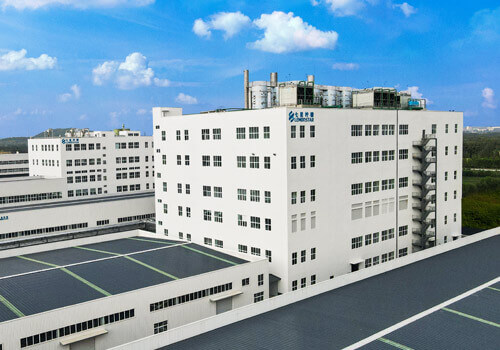
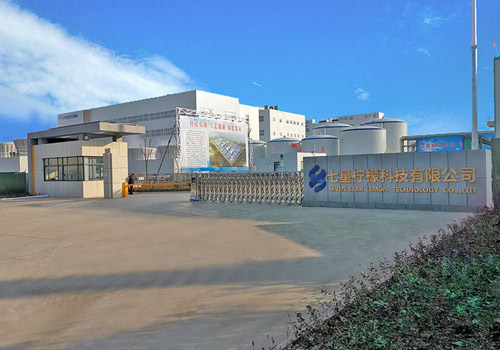
Seven Star Lemon Technology Co., Ltd.: A Global Citric Acid Leader Driving Innovation and Green ManufacturingSeven Star Lemon Technology Co., Ltd., headquartered in Yishui County, Shandong Province, has rapidly ascended to become one of the world’s top citric acid manufacturers since its founding in January 2018. With a total investment of 3 billion yuan, the company spans 883 mu of land, employs over 1,000 skilled professionals, and boasts an annual production capacity of 450,000 tons of high-end citric acid series products, solidifying its position as a global industry pacesetter. Specializing in the R&D, production, and sales of citric acid derivatives, Seven Star Lemon’s core offerings include citric acid monohydrate, anhydrous citric acid, trisodium citrate dihydrate, high-end protein feed, and granular sludge. These products cater to diverse sectors such as food and beverage, pharmaceuticals, detergents, and animal feed, and are exported to more than 130 countries and regions worldwide. The company has forged stable, long-term partnerships with over 500 renowned global enterprises, including Coca-Cola, Nestlé, and Procter & Gamble, underscoring its international market credibility. Technological innovation is the cornerstone of Seven Star Lemon’s competitive edge. The company pioneered high-concentration citric acid fermentation technology, breaking through long-standing industry bottlenecks and filling domestic gaps in high-acidity citric acid production. It employs the world’s most advanced “hydrogen calcium method + chromatography + continuous ion exchange extraction” process, paired with cutting-edge equipment like MVR concentration systems, which drastically reduces production costs while elevating product purity and consistency. Backed by industry-university-research collaborations, the firm holds 8 national invention patents, 24 utility model patents, and 7 software copyrights, and has participated in formulating 1 industry standard. Its smart factory, integrated with DCS and ERP systems, enables fully automated, data-driven production, ensuring precision and efficiency. Committed to green and circular development, Seven Star Lemon has built an intelligent, clean production system. By recycling biogas from wastewater treatment for on-site power generation, the company cuts comprehensive energy consumption by over 20% compared to traditional processes. It has earned certifications including ISO9001, FSSC22000, BRC, and HALAL, and has been recognized as a national high-tech enterprise, manufacturing single champion, and provincial-level smart factory. As a key player in China’s bio-fermentation industry, Seven Star Lemon continues to lead technological breakthroughs and sustainable practices, reinforcing its role as a global benchmark in citric acid manufacturing and contributing to the high-quality development of the global food additives sector. CONTACT INFORMATIONWebsite:https://www.lemonstar-citric-acid.comPhone:+8615380400285Email:sales2@liwei-chem.com

June 15, 2026
Seven Star Lemon Technology Co., Ltd.

seven star company

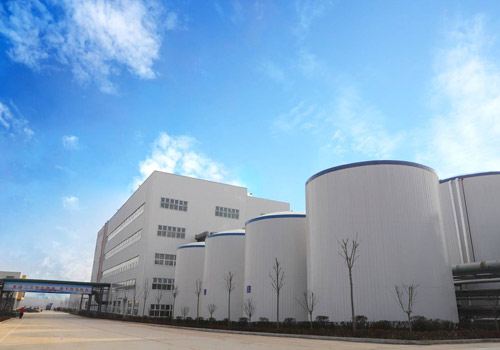
Seven Star Company: Forging New Benchmarks in Global Bio-fermentation and Green Additive Manufacturing Based in Yishui County, Linyi City, Shandong Province, Seven Star Lemon Technology Co., Ltd. is a national high-tech and specialized, sophisticated and innovative enterprise dedicated to the bio-fermentation industry. Rooted in the modern fine chemical and food additive sector, the company has built a full industrial chain integrating raw material processing, product R&D, intelligent production and global marketing, emerging as a core competitive player in China’s citric acid manufacturing field. Differentiating from traditional fermentation enterprises relying on extensive production modes, the company takes corn as the core raw material to develop environmentally friendly and high-value citric acid series products. Its product portfolio covers food-grade and pharmaceutical-grade citric acid, sodium citrate, as well as recycled high-end protein feed and granular sludge, realizing full resource recycling. These products are widely applied in food and beverage processing, daily chemical cleaning, pharmaceutical manufacturing, feed processing and fine chemical industries, with diversified application scenarios and strong market adaptability. With standardized intelligent manufacturing workshops, the enterprise adopts refined and automated production management modes, strictly complying with international food safety and quality system standards. It has obtained multiple authoritative international certifications, laying a solid foundation for global market layout. Up to now, its sales network covers more than 130 countries and regions across Europe, Southeast Asia, the Middle East and other global markets, maintaining long-term stable strategic cooperation with hundreds of international well-known brands. Focusing on green and circular development, the company optimizes production techniques and energy utilization structures to reduce industrial energy consumption and pollutant emissions, achieving coordinated development of economic and environmental benefits. As a leading single manufacturing champion in the regional fermentation industry, it continuously promotes technological iteration and industrial upgrading, boosting the high-quality and sustainable development of the global bio-additive manufacturing industry.

June 15, 2026

Seven Star Lemon Technology Co., Ltd.

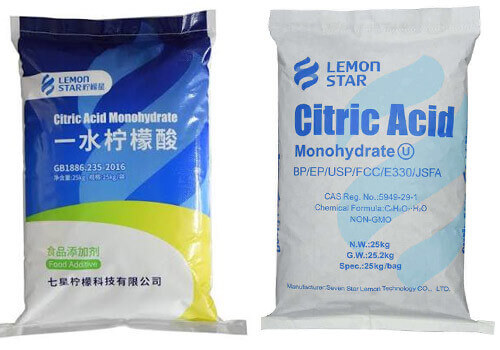
Seven Star Lemon Citric Acid Monohydrate

Seven Star Lemon Citric Acid Monohydrate: Premium-Grade Product Leading Global Food Additive Standard Seven Star Lemon Technology Co., Ltd. has established a solid global market reputation relying on its flagship core product—citric acid monohydrate. As one of the most widely used organic acid additives in the food, beverage and fine chemical industries, the company’s high-purity citric acid monohydrate stands out in the global market for its stable quality, high safety standards and advanced production craftsmanship, becoming a benchmark product in the domestic bio-fermentation sector. Different from conventional monohydrate citric acid products in the market, Seven Star Lemon’s core products adopt the independently optimized high-concentration fermentation technology, breaking the technical limitations of traditional low-efficiency fermentation processes. The company applies the mature and efficient “calcium hydrogen method + chromatography + continuous ion exchange extraction” integrated process, paired with intelligent DCS distributed control system to realize full-process precise control of fermentation, concentration, crystallization and drying. This innovative process effectively improves product purity and crystal uniformity, while greatly reducing impurity residue, meeting the strict quality requirements of high-end international markets. To guarantee consistent product quality, the enterprise has built a professional precision testing laboratory equipped with Agilent high-performance liquid chromatographs, automatic moisture analyzers and bacterial endotoxin detection equipment. All citric acid monohydrate products undergo full-index testing before delivery, strictly complying with ISO9001 quality management system, FSSC22000 food safety system and international HALAL certification standards. The product features stable moisture content, uniform granularity and excellent solubility, perfectly adapting to refined production scenarios of high-end beverages, canned food, dairy products and pharmaceutical auxiliary materials. With outstanding product performance and reliable quality control, Seven Star Lemon’s citric acid monohydrate has broken the monopoly of foreign high-end additive markets. It has become a long-term designated supplier for dozens of international top food and daily chemical brands, with its market coverage continuously expanding across Europe, America, Southeast Asia and other regions. While scaling up high-quality product output, the company insists on green circular production, realizes full recycling of production by-products, lowers unit production energy consumption, and leads the high-quality, low-carbon and intelligent development trend of the global citric acid monohydrate industry. CONTACT INFORMATIONWebsite:https://www.lemonstar-citric-acid.comPhone:+8615380400285Email:sales2@liwei-chem.com

June 15, 2026
Seven Star Lemon Technology Co., Ltd.

Seven Star Lemon

Seven Star Lemon: Building a New Benchmark for High-End Bio-Manufacturing in Global Fermentation Industry As a leading high-tech bio-manufacturing enterprise rooted in Yishui, Shandong Province, Seven Star Lemon Technology Co., Ltd. has emerged as a key player reshaping the global citric acid fermentation industry. Founded in 2018, the company focuses on the deep processing of biological raw materials and the R&D of fine chemical additives, operating a modern production base covering 883 mu. It holds a mature annual production capacity of 450,000 tons of citric acid series products, ranking among the top-tier manufacturers in the global fermentation sector. Different from traditional extensive fermentation enterprises, Seven Star Lemon adopts a circular industrial model centered on corn deep processing, realizing full industrial chain coverage from raw material refining, biological fermentation to finished product manufacturing and by-product recycling. Beyond mainstream citric acid products, the company diversifies its product layout with high-value downstream products including sodium citrate series and high-protein feed materials, effectively serving food processing, pharmaceutical manufacturing, daily chemical industry and new material auxiliary fields. Its global sales network spans over 130 countries and regions, maintaining long-term stable strategic cooperation with more than 500 internationally renowned brands. Technological research and institutional innovation constitute the core competitiveness of the enterprise. Certified as a provincial-level “One Enterprise, One Technology” R&D Center, the company insists on industry-university-research collaborative innovation and owns a complete independent intellectual property system. It holds 8 national invention patents and 24 utility model patents, and has participated in optimizing industry production standards, continuously breaking through technical pain points in traditional fermentation efficiency and energy consumption. Meanwhile, the company has obtained ISO45001 occupational health and safety certification, ISO5001 energy management system certification and IP non-GMO certification, forming a comprehensive standardized management system. In recent years, Seven Star Lemon has gained wide industry recognition for its intelligent and green manufacturing layout. It has been successfully selected into the municipal green manufacturing enterprise list and awarded the provincial advanced intelligent factory title, marking its full realization of intelligent control, low-carbon operation and clean production. By optimizing energy structure and promoting by-product recycling, the enterprise effectively reduces unit energy consumption and carbon emissions, setting a typical example for green upgrading of the domestic bio-fermentation industry. Committed to high-quality global development, Seven Star Lemon continues to empower the upgrading of the global fine additive industry with Chinese intelligent manufacturing strength.

June 15, 2026

Seven Star Lemon Technology Co., Ltd.

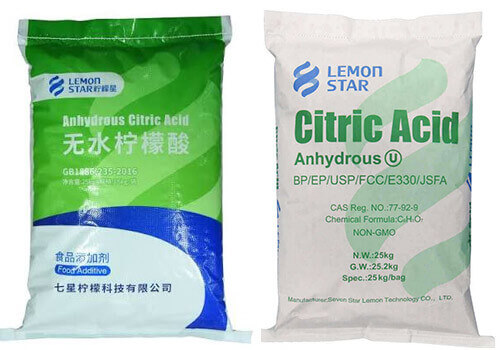
Seven Star Lemon Citric Acid Anhydrous

 The conversations about citric acid often circle around packaging and pricing, but that misses what matters. Manufacturers like us live inside the world of process controls and source integrity. The market uses heaps of Seven Star Lemon Citric Acid Anhydrous. Its predictability, sharp acidity, and persistent solubility keep many production lines running smoothly in food, beverage, and cleaning plants. For us, every batch means walking the walk through fermentation, purification, and drying, not just moving sacks around the globe.  When a customer unseals a bag, they trust every granule matches what the last shipment delivered. No short-cutting, no gray-market blending. No wild swings in physical properties that slow a tank line or leave residue that pulls engineers back for troubleshooting. Citric acid has never been a commodity where surprises go unnoticed. Our lab staff samples every run, again and again, not just to see a number on a spec sheet, but to head off any slip in color, taste, or clarity. An off-batch draws attention from the processing manager, who runs real solutions, not only paperwork. A production hiccup at our site upsets a factory halfway across the world. We track each input – whether it came from corn or cassava – and we keep contamination off the table by working directly with raw material growers.  Questions about “Seven Star Lemon” often come down to consistency and history. The world’s producers have seen plenty of influx from new plants in the last decade, yet old frustrations with off-taste or yet-unexplained solubility problems still show up where the manufacturer stretches production speed or takes raw sugar from questionable sources. Not all crystal shapes behave alike on the line. It takes experience running the reactors, watching the behavior on the centrifuge, and understanding which filtration step pulls out hidden byproducts. This isn’t just paperwork for auditors — it’s how to get the right acidic bite for soft drinks or the clean rinseout required for industrial detergents.  Food safety doesn’t wait for theoretical discussion. We hold every tank against standards set not in a distant office, but through years of managing machinery and people. Our staff walks the plant floor for daily checks, not just random audits. Western brands ask for more information, often in response to consumer allergy concerns or food fraud scares. Sophisticated buyers probe our supply chain, asking for proof of origin on the glucose feed, and for third-party validation. We hand out those answers, but only after we check for ourselves — our own staff tests for protein carryover and pesticide residue at each stage, not just at dock doors. When news breaks about contamination incidents, people call us for a simple reason: we remember what a missed step means for a downstream bakery or canning operation.   The shift to more transparent and rigorous quality controls across the global industry raises the bar for everyone. This is good. It means less chance for substitute materials or recycled packaging to sneak past. When a brand tries to push price too far, it forgets the real risks — machinery shutdowns, recalls, even health hazards caused by unknown impurities. Reliable citric acid protects jobs. Production lines keep moving, flavor profiles stay sharp, and risks stay managed. This is not something that can be replaced by an untested shortcut or flashy marketing.  The topic of supply stability now dominates industry conversation. Ports close. Inland trucks stop. Shipping windows collapse in the face of new regulation or unrest. Our response sits in process control and partnership; we keep robust inventories, rehearse logistics breakdowns, and work with logistics partners who know our materials, not just treat them as generic. Factories depend on us to deliver on time, not make excuses when supply lines fray. Every past disruption leaves us with new protocols, from batch-size adjustments to short-term warehousing. Delays in citric acid halt entire beverage bottlers. Our job is to see those risk details before they erupt.  There’s talk about “greener” processing, but the truth runs deeper than buzzwords. We run emissions audits. We capture and treat wastewater. We push process efficiency because waste costs money, not just headlines. Down the road, energy and resource consumption must come down, so we keep investing in enzyme efficiency and waste valorization. But change comes slowly in an industry rooted in process reliability. If citric acid production burns less fuel or sheds less carbon, the work happens batch by batch in the factory, not just in investor pitch decks.  The future of our sector presses for traceability, safety, and openness. Large food and drink manufacturers look deeper than price sheets. They want to see every bit of data, every audit log, every employee training record. The growth in regulatory oversight isn’t a hassle – it’s necessary. No one can afford doubt about what lands in a consumer product. At our site, hard lessons learned in decades of work push us to improve, to clean up legacy processes, to land each bag, drum, or truck exactly as promised. Seven Star Lemon Citric Acid Anhydrous keeps production safe, but only with labor and vigilance. We owe that to our partners down the line and every consumer who takes a drink or tastes a cake. CONTACT INFORMATIONWebsite:https://www.lemonstar-citric-acid.comPhone:+8615380400285Email:sales2@liwei-chem.com

June 15, 2026
Seven Star Lemon Technology Co., Ltd.

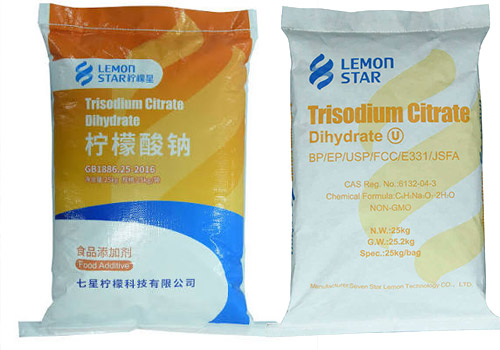
Seven Star Lemon Sodium Citrate

Year after year, we run hundreds of tons of sodium citrate through our lines, but attention never used to reach it the way “Seven Star Lemon Sodium Citrate” recently did. Production teams like ours spend late nights dialing in purity and texture batch by batch because low-grade sodium citrate turns drinks cloudy, solutions unstable, and flavors harsh. Most people opening bottles in restaurants or adding powder to soft drinks hardly think about the effort upstream. In our grinding rooms, controlling every variable—dryness, granule size, absence of off-flavors—matters a lot more than most realize. Every chemical whiff, temperature blip, or hint of oiliness means going back to the test lab, not out to market. Years in this industry taught us that the stuff you let slide when demand is high becomes the stuff that bites you later: failed customer audits, recalls, bad press. The “Seven Star” reputation winds up in our hands every single shift, so we chase quality because we know what happens without it.Many headline stories focus on rising usage of sodium citrate in drinks, confections, jams, and even pharmaceutical blends, but factory workers see something deeper—the chain of hands passing this compound from raw material to tanker truck, from mixing line to storage bin. As a manufacturer, we inspect every incoming barrel of citric acid and sodium carbonate, because any deviation in those ingredients—a moisture-rich shipment, a batch with residue from the previous run—brings the whole downstream process into question. I’ve seen what happens if you try to save a few cents on raw material or skip a moisture check: cakes of hard, unusable product, lumpy crystals clogging rotary feeders, and QA reports stacked high on the supervisor’s desk. Clean, reliable inputs aren’t just about following an SOP; they’re a promise we uphold for the beverage makers aiming for clear lemonade or the pharma mixers whose accuracy must stay within micrograms. Many end users still think “food grade” or “pharma grade” are labels that just appear, but in our facility every certificate of analysis comes at a cost of vigilance and, sometimes, a lost Saturday testing suspicious lots or doing an unexpected filter change. Demand for “Seven Star Lemon Sodium Citrate” rides the crest of consumer trends—less sugar in beverages, more functional foods, natural-label claims. Down on the production floor, we adapt by reducing dust formation and retooling our granulators for finer control of particle size since cloudiness and sediment problems trace right back to our operations. Our materials team began evaluating new food-grade lubricants and anti-caking methods, digging through supplier transparency reports late into the night. We switched suppliers after a series of failed traces linked an off-flavor to a particular batch of raw citric acid. As allergen-free claims grew louder in the export markets, we ramped up batch segregation, requiring full washdowns of all contact surfaces between runs for sensitive customers. Food safety certifications like FSSC 22000 prove difficult—one missed temp log or unlabeled drum can derail progress—but their value is clear after seeing a crisis averted due to our extra measures. Modern demand means less tolerance for cloudy lemonade, acrid aftertastes, or metallic residues. We cannot afford short cuts; every minute saved in production can cost weeks in reputational harm.The surge in product demand brings pride but also exposes weaker links. Retaining skilled technicians who can spot tiny abnormalities by sight or smell makes a stronger difference than most outside this trade realize. Years working alongside colleagues who have razor instincts for contamination or reaction failures built our factory into what it is. We invest in these workers instead of relying solely on automation because, when lines run around the clock, alarms alone won’t save a contaminated batch. Our company’s roots run deep with repair staff who salvage critical batches with quick valve changes or who remember a QC outlier from fifteen years ago that sounds eerily similar to a current problem. Real expertise beats theory when troubleshooting stubborn reaction vessels, so we build both our SOPs and shift teams around this hard-won knowledge. Seven Star Lemon Sodium Citrate doesn’t reach customers through luck or marketing promises. We pour knowledge, sweat, and years of incremental improvements into every lot. My team upgrades techniques after every major incident or customer complaint—the same way we changed our filtration processes, refined our input moisture specs, or overhauled our waste-reduction protocols. We maintain traceable records, keep redundant checks on our in-process controls, and foster on-the-job training layered with mentorship from legacy operators. Everyone on the line, from packaging to blending, knows where slip-ups matter and why every shortcut is an invitation to disaster. As demand grows and headlines focus on our work, those closest to manufacturing continue bearing both the pressure and the pride, because every decision—big or small—ripples down to the real world, where a single failed batch ruins more than a supplier’s rating: it erodes trust we spent decades building.

June 15, 2026